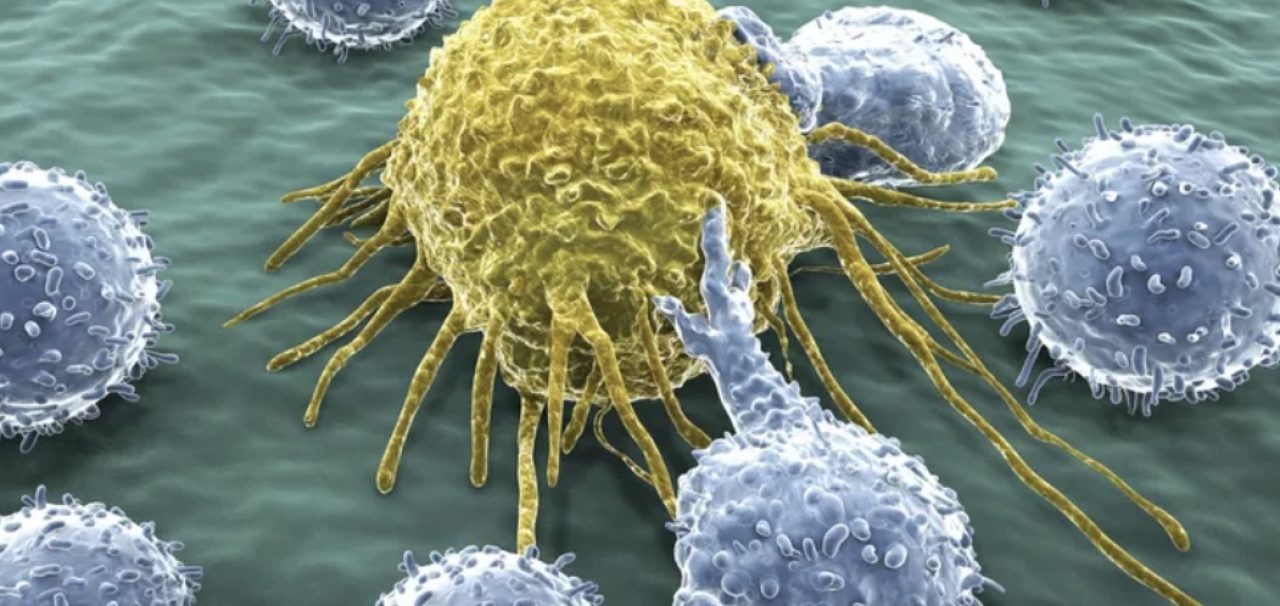
The realities of living with AML are explored in the BBC soap, highlighting the significant challenges of the diagnosis.

Getting a diagnosis of cancer at any time can feel overwhelming and isolating. The type of disease, the treatment ahead, and the prognosis all shape how a person processes the news and copes with what comes next. When hairdresser Denise in the BBC soap EastEnders was told she had acute myeloid leukaemia (AML), she immediately struggled to absorb the reality of it. She had quietly sought medical advice for persistent exhaustion, keeping her concerns from her family, and even left a joyful wedding celebration to attend the appointment. Sitting alone in the consultation room, she heard the doctor explain that she had blood cancer. She outlined the realities of living with AML, the significant challenges of the diagnosis, and the rarity and aggressive nature of the disease. As the words settled, Denise was left trying to make sense of a life‑changing moment that no one around her even knew was happening.

The Realities of living with AML

Heading back to her family and friends. None of whom knew where she had been or what the appointment had revealed. She travelled home on the bus in a state of quiet disorientation. The conversation with the clinician replayed in fragments, each phrase surfacing and fading as her mind tried to process the information. Everyday sounds and movements around her felt distant, almost muted, as if she were observing the world from behind glass. The journey became a space where shock, uncertainty, and the first attempts at understanding coexisted. Many people who have received unexpected or life‑altering news will recognise this moment: the return to normal surroundings while carrying something profoundly new and difficult to articulate.

What is AML?

Acute myeloid leukaemia (AML) is a cancer of the blood cells. On hearing those words for the first time can feel deeply unsettling. In AML, the body begins to produce abnormal blood cells that don’t behave as they should, disrupting the balance the body relies on to stay well. Because it develops quickly, treatment usually needs to begin soon after diagnosis, leaving little time for individuals to process what is happening.

Although AML can occur at any age, it remains a rare condition. Around 3,100 people in the UK are diagnosed each year, with the highest number of cases seen in older people. For many, the rarity of the disease adds another layer of uncertainty. It is not something most people expect to face or know much about. Coming to terms with the diagnosis often involves navigating both the medical realities and the emotional weight of suddenly stepping into unfamiliar territory.

Symptoms of AML

🩶 Pale or “washed‑out” skin

😓 Persistent tiredness

🌬️ Breathlessness during normal activities

⚖️ Unintentional weight loss

🦠 Frequent or recurring infections

🌡️ High temperature or episodes of feeling hot, cold or shivery

😰 Night sweats

🩸 Unusual or frequent bleeding (gums or nosebleeds)

💜 Easily bruised skin

🔴 Flat red or purple spots on the skin (petechiae)

🦴 Bone or joint pain

🍽️ A feeling of fullness or discomfort in the tummy

🧬 Swollen glands in the neck, armpit or groin (may be tender)

Getting a diagnosis of AML

First,

🩺 GP physical examination Initial assessment when physical signs or symptoms appear.

then go on to get

🧪 Blood tests Full blood count and specialist blood markers to identify abnormal cells.

🦴 Bone marrow biopsy A sample taken from the hip bone to confirm AML and assess cell types.

🧬 Genetic testing Identifies specific gene mutations that guide treatment decisions.

📸 Chest X‑ray Checks for infection or complications affecting the lungs.

and finally

💉 Lumbar puncture Used in selected cases to check if leukaemia cells have entered the central nervous system.

Transparent Communications

Treatment Plan for AML

Treatment for acute myeloid leukaemia (AML) is usually delivered in two main stages. Each with a clear purpose and a very different emotional and physical experience for the person going through it.

  • 🧪 Induction therapy This is the first and most intensive stage of treatment. The aim is to destroy as many leukaemia cells as possible in both the blood and bone marrow. As well as managing any symptoms caused by the disease. It can feel overwhelming, as treatment often begins quickly after diagnosis. However, it is a crucial step in bringing the leukaemia under control.
  • 🧬 Consolidation therapy Once induction has reduced the number of leukaemia cells, the second therapy starts. Consolidation aims to prevent the cancer from returning. This stage focuses on eliminating any remaining cells that cannot be seen on tests but could cause relapse in the future. It is a vital part of achieving long‑term remission.

Coming to terms with an AML diagnosis is never straightforward. The treatments are demanding, the uncertainty is heavy, and life can feel profoundly altered for the person affected and everyone close to them. The reality of navigating such a life‑changing condition is harsh and often overwhelming. By bringing this storyline to screen, the BBC helps raise awareness and shines a light on the significant challenges people face when confronted with a diagnosis like this. Challenges that are too often hidden from view, highlighting the realities of living with AML.

Inferior Outcomes

In EastEnders, Denise’s experience carries an added layer of fear and uncertainty because she is a woman of colour. Research has shown that Black patients with AML often have poorer survival outcomes than White patients. A reality that many people are unaware of until they are faced with it themselves. At her appointment, Denise voiced the question that so many Black patients quietly carry: does the colour of my skin make a difference to how I will fare?

It was a moment filled with deep vulnerability. Not only because of the diagnosis itself, but because Denise was confronting the painful reality that health inequalities still exist. For many people of colour, a cancer diagnosis carries an added weight: the knowledge that outcomes are not always equal, and that lived experience and systemic disparities can shape fears in ways others may never have to consider. By allowing this conversation to unfold on screen, the BBC brings an important truth into the open and that for some communities, illness is not just a medical journey but an emotional one shaped by history, inequality, and the need to be heard. Acknowledging this openly helps shine a light on an issue that deserves far greater understanding and attention.

A paper showing inferior outcomes can be read in ScienceDirect

Perfume UK The Green Welly Stop Bioptimizers

Virtual Reality comes to Bristol Children’s Hospital

During a 2 year project young patients with the use of the headset and SyncVR Fit Application for the duration of their physiotherapy sessions are carried off into a new virtual world. Enjoy time fully immersed in activities such as picking fruit on a tropical island, taking part in archery, brewing potions in the cauldron and boxing in the gym to name a few. Offering not only encouragement for mobilisation but a chance to escape and leave the room from what is going onVirtual reality comes to Bristol Children’s Hospital

Going into hospital at anytime can be difficult and scary. For children up to the age of 12 frequent visits to The Starlight ward at Bristol Children’s Hospital very often involves treatment and a long stay. Some are in isolation and the ward becomes their home for quite some time. Many already feeling unwell and have gone through difficult treatments. Forcing time apart from family and friends. Taken away from everyday living in general, something many of us all too often take for granted.

The ward boasts wonderful specialist care with amazing staff, availability of super facilities such as the playroom, etc. However the children at times need help with low motivation and something extra as a distraction, yearn for something else.

A two year lease funded by Bristol & Weston Hospitals Charity Above and Beyond of three virtual reality headsets supplied by SyncVR Medical made their way onto the ward. The headsets have an application SyncVR Fit enabling the children to take part in their physiotherapy. Even on the more difficult days the googles can be worn in bed. Working with their physiotherapists children can put on a headset escaping the room and find themselves picking fruit in warm and inviting surroundings with green grass and water nearby. Or they may be in the gym, boxing. Regardless of age we all need escapism. Technology made its way to The Starlight ward. Virtual reality comes to Bristol Children’s Hospital.

Mobilisation, Physio and so much more

Physiotherapists tailor sessions to each patients needs and abilities. Pairing up the goggles with an iPad the physiotherapist is able to or help the patient choose icons via the iPad. The iPad shows what the headset wearer is experiencing. The combination of the caring physiotherapist and the headset really helps increase motivation, encourage children to take part in their physio and start to mobilise. Staff can see that the mood is lifted by both patients and parents in the room.

Asking physiotherapist Lucy Lidgett what she thought and if she felt it helped, she felt it most definitely helped and on the days children had low motivation the idea of entering the virtual world inspired them to try she said “something is better than nothing”. Phisio Kate Millar added “the headsets encourage people to be active and gives a reason to get out of bed”

Stem Cell Transplant Nurse specialist Penny Taylor from the outset felt that bringing virtual reality to the ward could only be a positive form of input. She has no hesitation in recommending the headsets. Penny and staff hope further funding will be available so they can continue with headsets and then start to use them for other reasons as well as physiotherapy.

Listening to Nye and his Mum Sarah Clark enthusiastically talk about the virtual reality headsets was a privilege.

Nine-year-old Nye arrived at Bristol Children’s Hospital. His journey has been a battle to say the least. He has undergone a marathon of treatments. Bravely fought through gruelling chemotherapy and car T cell Therapy.

Nye came to the bone marrow transplant ward for Isolation, treatment, and physiotherapy. The Starlight ward became his home for a long 100 days. A single room, the same cubicle for the duration of his stay he was treated with a stem cell transplant for Relapsed B-cell acute lymphoblastic Leukaemia. Pushing his young body to extreme limits.

For this positive youngster physio was something to look forward to.

Listening to 9 year old Nye and his Mum was a privilege, hearing them them talk about their time in the ward and enthusiastically tell of the virtual reality physiotherapy. During his stay he had quite a battle with the spoonful of medicine pushing his young body to its limits.

Mum Sarah said “the medical staff did explain how difficult the treatment would be, but I don’t think anything could prepare us for how Nye would feel. Radiation hit him hard. He lost his core strength, was extremely tired and there were days he was so poorly and tired he couldn’t get out of bed.

With the encouragement and assistance of staff this young boy with vision problems donned a headset. At the beginning Nye’s motivation was low however soon he looked forward to physio sessions. Despite fatigue he was keen to get mobile and actively enjoy the time with the headset on. As strength and confidence grew beating the previous score and doing better than last time was Nye’s ambition. Nye’s Mum said “it was so lovely to watch, seeing him happier and trying was so good. To think this is all free and accessible”. He brought his room and virtual reality together using a chair as a prop.

Nye absolutely loves the virtual reality physio. He didn’t let the fact that he sees out of one eye deter him. Entering this new world not only helped with mobility and offered some distraction but gave a sense of community. These physiotherapy sessions help not only patients like Nye but their families too. Virtual reality offers something very valuable.

At home looking back on his experience Nye said
I feel like I was stuck!
It really helped me.
I escaped this room, this room I’m in.
It’s good — It’s nice

VR with SyncVR Medical

Supplier of the headsets SyncVR Medical are proud to be using a platform to make a positive impact in healthcare. The application used on the ward for physiotherapy SyncVR Fit offers a fabulous selection of activities. Enabling patients to take part in physio, lying, sitting or standing. Patients can do full body exercises, lower body and upper body exercises.

Users can take part in a variety of applications including beach ball squats, breathing, goal keeping, tennis, fireflies, archery and witchcraft. Dependent on choice the app helps with different parts of the body including arms, legs, shoulders. It can also help with hand/eye coordination.

On chatting with Jack Cato from SyncVR Medical he said “I feel very proud and privileged to be part of this project which is having such a positive impact. This also inspires me to help more patients like Nye, improving healthcare with extended reality”

Trying out Virtual Reality

Whilst visiting Bristol Children’s Hospital I experienced for myself the headset. As a non gamer I went into it with an open mind. Patiently Jack helped me on with the headset, handed me a controller for each hand. Don’t mind saying I was feeling nervous. I took a breath and opened my eyes. Transported to a tropical island with beautiful lush green grass I gazed at trees with delicious red apples. As I clumsily held the controllers in my hands almost awkwardly I started to pick apples from the tree trying my best to get them in the basket. Soon I was enjoying myself and eager to make sure I got them all collected. I then tried the practice in the gym. Objects flying at me, I soon found myself hitting them while matching the colours.

When I took the headset off I looked around the room. Physio Kate had been in and out of the room whilst I was immersed in the gym. I was totally oblivious of what had been going on in the room. Can honestly say I was definitely transported to another world. Thinking of nothing other than concentrating on the objects and scenery that surrounded me.

Getting the opportunity to use the applications let me see how good they are. After speaking with a young patient, a parent and staff from the hospital I found out how useful virtual reality is to healthcare. Offering distraction whilst helping patients get mobile and giving the chance to visit and enjoy places I never thought possible.

Jack Cato from SyncVR and Physiotherapist, Kate Millar.